
Large-Scale Site Grading & Drainage
Water decides what a property can become. Everything else is negotiable.
Shaping Ground That Works
This is the least visible work we do and the most consequential. Grading and drainage determine whether a patio holds, whether a foundation stays dry, whether a lawn is usable in April, and whether a wall is still standing in fifteen years. When it is done well, nobody ever thinks about it again. That is the goal.
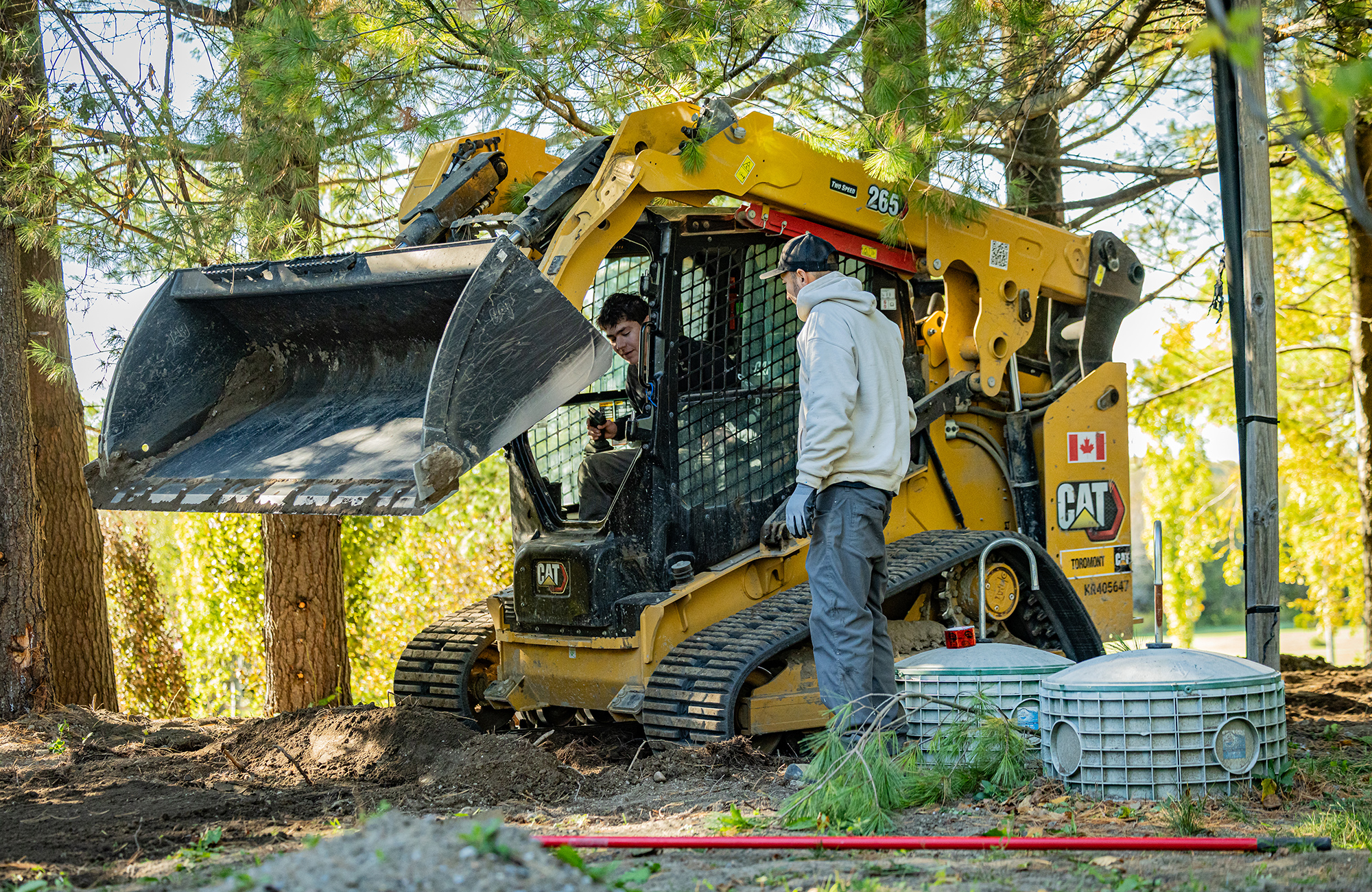
- Elevations shot and existing conditions documented across the full property.
- Water tracked to where it actually goes — including where it arrives from off-site.
- Soil profile assessed, because clay and sand demand entirely different solutions.
You cannot fix a water problem you have not measured. Most failed drainage work is a solution applied to the wrong diagnosis.
- Grades designed to move water away from structures at proper fall.
- Pipe sizing, invert elevations, and outlet capacity calculated for real storm volume.
- Municipal grading requirements and approvals handled as part of the work.
Turnkey permit applications, engineering, and approvals.
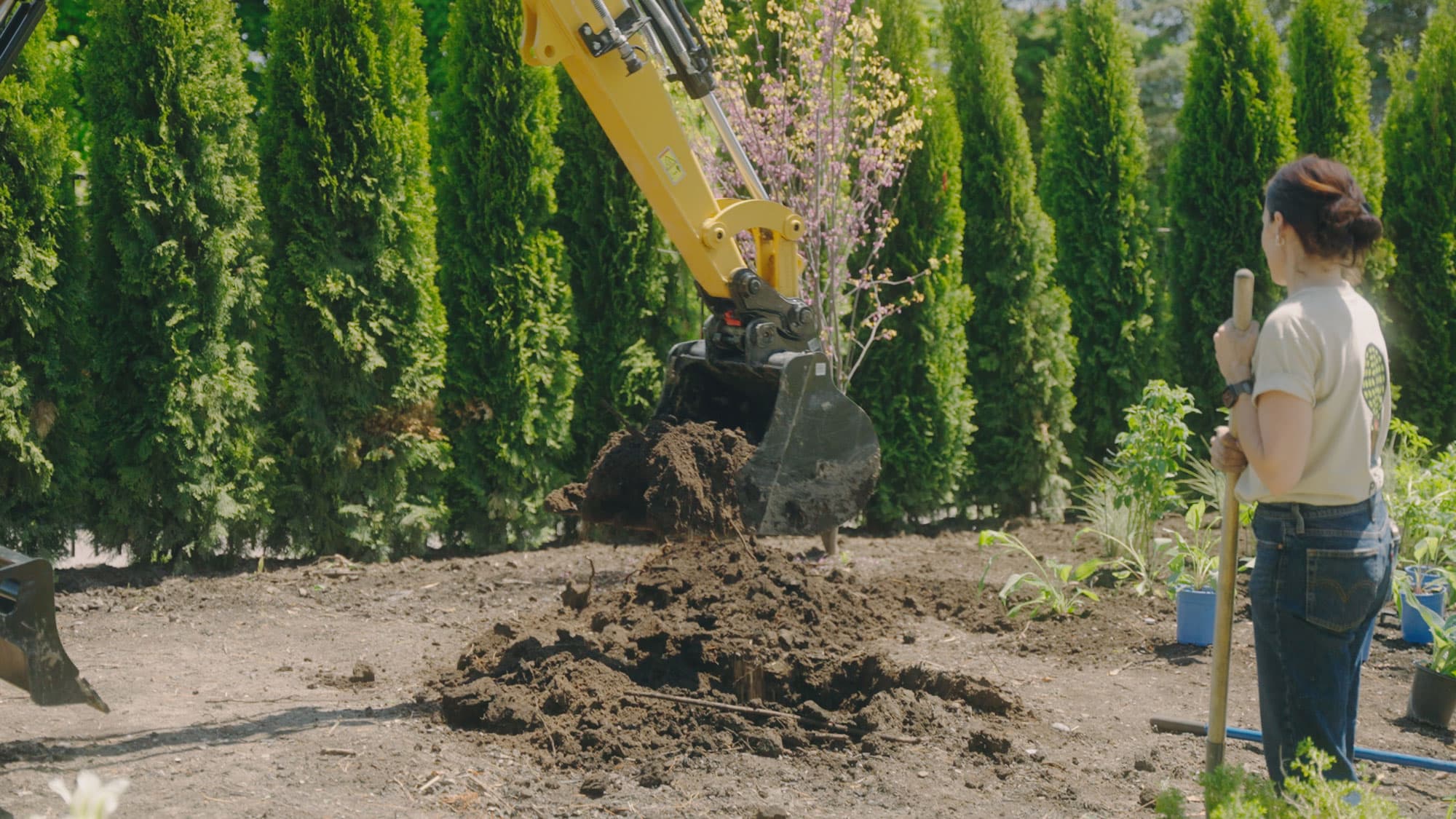
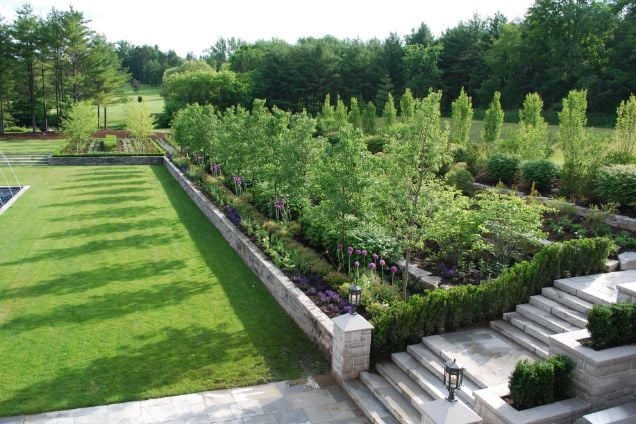
- Machine work executed by operators who understand finish grade, not just bulk earth.
- Compaction managed through every lift, because settlement is a drainage problem later.
- Systems built to be maintainable — cleanouts, access, and outlets that can be serviced.
Proper excavation. Reinforced construction. Engineered drainage.
Site Work We're Proud Of
Explore recent projects and see how reshaping the ground changes what a property can hold.
Precision, Materials, and Long-Term Performance
-
Lot grading and land shaping — full-property regrading, berming, and contouring for both function and form
-
Underground drainage systems — catch basins, French drains, perimeter systems, and piped outlets
-
Foundation and weeping tile drainage — moving water away from the building before it becomes an interior problem
-
Stormwater management — detention, retention, and controlled release designed to municipal requirement
-
Retention ponds — designed, excavated, and integrated as landscape features rather than infrastructure
-
Erosion control — swales, bioswales, armour stone, terracing, and stabilized slopes
-
Dry creek beds and surface conveyance — visible drainage designed to look intentional
-
Permeable systems — permeable paving and infiltration designed to reduce runoff at the source
-
Heavy equipment site work — access, staging, and excavation on complex or constrained properties
Erosion control, stormwater management, and land shaping. Retention ponds and underground drainage solutions.
A Clear Path to Completion
-
Share your vision. We walk the site — ideally during or shortly after rain — and identify where water enters, where it collects, and where it needs to go.
-
We design and manage the details. Survey, grading plan, engineering, and municipal approvals, coordinated with any hardscape, pool, or planting work so the sequence is right.
-
Enjoy a finished space that feels complete. Documented installation with daily photos and as-built drawings, so the location of every line is known for the life of the property.
Through disciplined planning and consistent communication, your project moves forward with clarity and confidence.
Grading & Drainage Across Durham Region
We work across Whitby, Ajax, Oshawa, Pickering, Bowmanville, Clarington, Scugog, Brock, and Uxbridge. Durham has a specific water profile. Much of the region sits on heavy clay that drains slowly and holds water against foundations and walls. The Oak Ridges Moraine to the north changes soil and groundwater conditions substantially over short distances. Properties running toward Lake Ontario carry sustained grade and concentrate flow. And spring here means a rapid melt over still-frozen ground — the single hardest condition any drainage system has to handle, because the soil cannot absorb anything and everything moves on the surface at once.
Systems designed for average rainfall fail in April. We design for April.
How do I know if I have a drainage problem? +
Standing water more than 24 hours after rain. Water against the foundation. Soggy lawn well into May. Erosion channels or exposed soil on slopes. Efflorescence or staining on retaining walls. Settling patio or walkway sections. Any of these is water telling you where it goes.
What does drainage work cost? +
[CONFIRM: typical range for a targeted drainage correction versus a full-property regrade.] A single catch basin and short run is a modest project. Regrading a full property with engineered stormwater management is a major one. The survey and assessment come first so the number is based on the actual condition rather than a guess.
Do I need a permit for grading work? +
Often yes. Most Durham municipalities regulate lot grading and require approval where drainage patterns or elevations change, particularly near property lines or where flow affects neighbouring lots. [CONFIRM: any specifics you want stated.] Permits, engineering, and approvals are handled turnkey.
What is a French drain and when is it the right solution? +
A gravel-bedded perforated pipe that intercepts subsurface water and carries it to an outlet. It is the right tool for saturated soil and subsurface flow, and the wrong tool for surface water arriving faster than it can infiltrate — that needs surface conveyance and catch basins. Choosing wrong is the most common reason drainage work fails.
Can drainage be fixed without tearing up the landscape? +
Sometimes. Targeted interventions, boring under hardscape, and surface solutions can resolve localized problems. Systemic issues — where the whole property drains toward the house — require regrading, and there is no way around it. The assessment tells us which one you have.
My neighbour's water is coming onto my property. Can you help? +
Yes, and this is more common than people expect on Durham's newer subdivisions and rural lots. Solutions range from interception and redirection on your side to formal grading corrections. Where a legal drainage obligation is involved, [CONFIRM: how you handle these — municipal involvement, engineer's report, etc.]
Does grading work have to happen before landscaping? +
Always. Grading and drainage set the ground plane everything else sits on. Building a patio, wall, or garden before the water is resolved means building it twice.
Create Your Escape Plan
If you're considering a significant outdoor transformation and want a team that brings structure, experience, and thoughtful execution, we should talk.